Bathrooms
How to Choose Bathroom Finishes for Easier Everyday Care
Compare bathroom surfaces, colors, textures, and fixtures by cleaning effort, wear visibility, moisture exposure, and household routines.
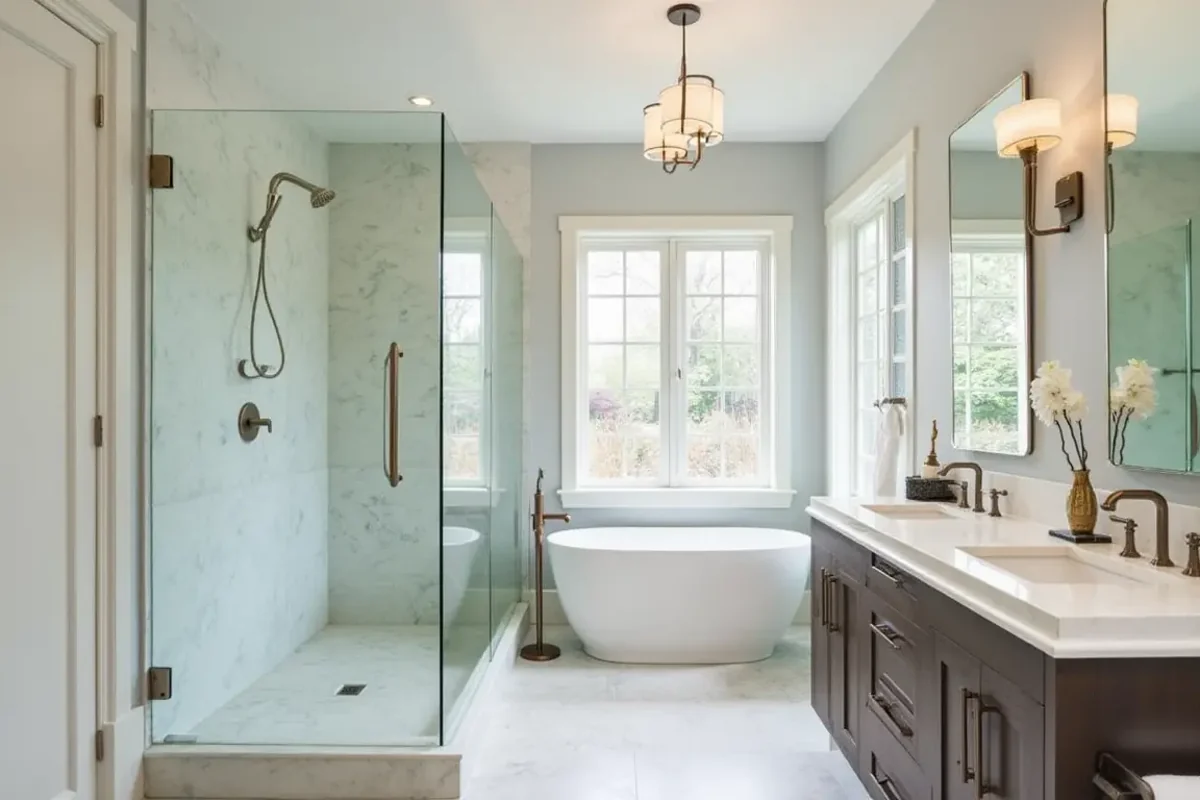
Bathroom finishes should be evaluated by how they respond to daily use, not just how they look in a sample. Use your household’s cleaning habits, storage needs, and tolerance for visible wear to narrow the choices.
Define What Low Maintenance Means for Your Household
Begin by identifying the work you actually want to reduce. One homeowner may dislike scrubbing grout, while another is more concerned about fingerprints on faucets, water marks around the sink, or dust collecting in decorative details. List the surfaces that currently demand the most attention and note why: difficult access, visible residue, too many seams, or a finish that shows every spot. This creates practical criteria for comparing new materials.
Consider who uses the bathroom and how the routine changes throughout the day. A shared family bathroom may need finishes that handle frequent sink use and scattered toiletries, while a guest bath may prioritize visual character over daily cleanup. In Newburyport, Newton, Wellesley, Boxford, West Newbury, and Danvers, seasonal humidity, tracked-in grit, and changing natural light can also affect how surfaces look. Discuss room conditions and material suitability with a qualified project professional.
Choose Floor and Wall Surfaces by Exposure
Do not assume every surface needs the same finish. Separate the room into areas based on likely contact with water, cosmetics, soap, towels, and foot traffic. Then ask how each candidate material responds to those conditions, what routine care its manufacturer recommends, and whether its texture or pattern makes residue more or less noticeable. Larger visual fields can feel calm, but the number of joints, edge details, and transitions may influence cleaning effort.
Compare samples under bathroom-like lighting rather than relying only on showroom displays or online images. Look at them from different angles, place a drop of clean water on an approved sample if the supplier permits it, and observe how the surface appears after drying. A heavily textured choice may add depth but require more attention in frequent-use areas. A very uniform glossy surface may wipe easily yet reveal streaks, splashes, or dust more readily.
Evaluate Grout as Part of the Overall Design
Grout color affects both appearance and perceived upkeep. A strong contrast can emphasize the tile layout, but it can also make irregular residue or color changes more noticeable. A closer color match creates a quieter field and may make everyday variation less prominent. Ask to see the tile and grout options together, because a small grout sample viewed separately may not show the combined effect across an entire wall or floor.
Joint layout also deserves attention before the finish is approved. Ask where cut edges, corners, niches, transitions, and vanity connections will fall, since these locations can influence the number of lines that require cleaning. Do not select grout or installation products based on appearance alone. Have a qualified project professional determine which materials and installation approach are appropriate for the chosen tile, location, and room conditions.
Match Fixture Finishes to Water Marks and Touch Points
Faucets, handles, shower components, mirrors, and cabinet hardware receive frequent contact, so assess how each finish shows fingerprints, droplets, soap residue, and minor wear. Highly reflective finishes can bring brightness and crisp contrast, while softer or brushed appearances may make everyday marks less obvious. However, names such as brushed, satin, matte, and polished are not always visually consistent across product collections, so compare physical samples whenever possible.
Decide whether exact matching or coordinated variation matters more. Combining finishes can add depth, but too many unrelated tones may make replacements and accessory selection harder. Hypothetical example: a homeowner might use one primary metal finish for faucets and shower components, then repeat a compatible darker tone on vanity hardware and lighting. Label the intended finish for every item in a selection list so similar product names do not lead to unintended differences.
Plan the Vanity Around Splashes, Clutter, and Cleaning Access
A vanity combines several maintenance decisions: cabinet finish, counter surface, sink style, hardware, and storage configuration. Ask where water typically collects, whether grooming products tend to remain on the counter, and how easily the area around the faucet and sink can be reached. Counter patterns with movement may disguise small droplets, while quiet solid colors can highlight them. Cabinet doors with elaborate profiles offer detail but introduce more edges where dust can settle.
Custom cabinets can help align storage with everyday habits rather than forcing every item onto the counter. Inventory tall bottles, backup toiletries, hair tools, towels, and cleaning products before choosing drawers, doors, or interior organizers. Hypothetical example: two people sharing a vanity might prefer separate daily-use drawers and one common area for bulk supplies. A project professional can help translate that inventory into suitable cabinetry while coordinating clearances, materials, and other technical decisions.
Build a Finish Schedule Before Final Selections
Create a room-by-room finish schedule that records each surface, product name, color, sheen, pattern direction, edge treatment, and intended location. Add the manufacturer’s care guidance and note any cleaner restrictions or periodic maintenance described in the product information. Review the schedule as a complete palette rather than approving pieces independently. Place samples together with towels, cabinet colors, and nearby flooring to identify undertone conflicts or an overly busy combination.
Before meeting with a remodeling professional, photograph the existing areas that collect residue or are hard to reach, list the products used most often, and rank your priorities as appearance, easier routine care, concealed storage, or resistance to visible wear. Bring physical samples when available and write down questions about seams, transitions, replacement availability, and recommended care. Ask the qualified project professional to confirm material compatibility and technical suitability before selections are finalized.